

Subwoofer Placement and Mechanical Isolation: Engineering Practices for Private Cinemas
Most private cinemas struggle with uneven, uncontrolled bass that shakes walls and disrupts the entire villa. Poor subwoofer placement and mechanical isolation not only degrade sound quality but also risk costly rework once construction closes in. This guide lays out a clear, engineering-driven approach to position and isolate subs effectively, ensuring balanced bass and structural quiet. You’ll see why early coordination with structure, MEP, and interiors is critical before walls and ceilings go up.
Strategic Subwoofer Placement
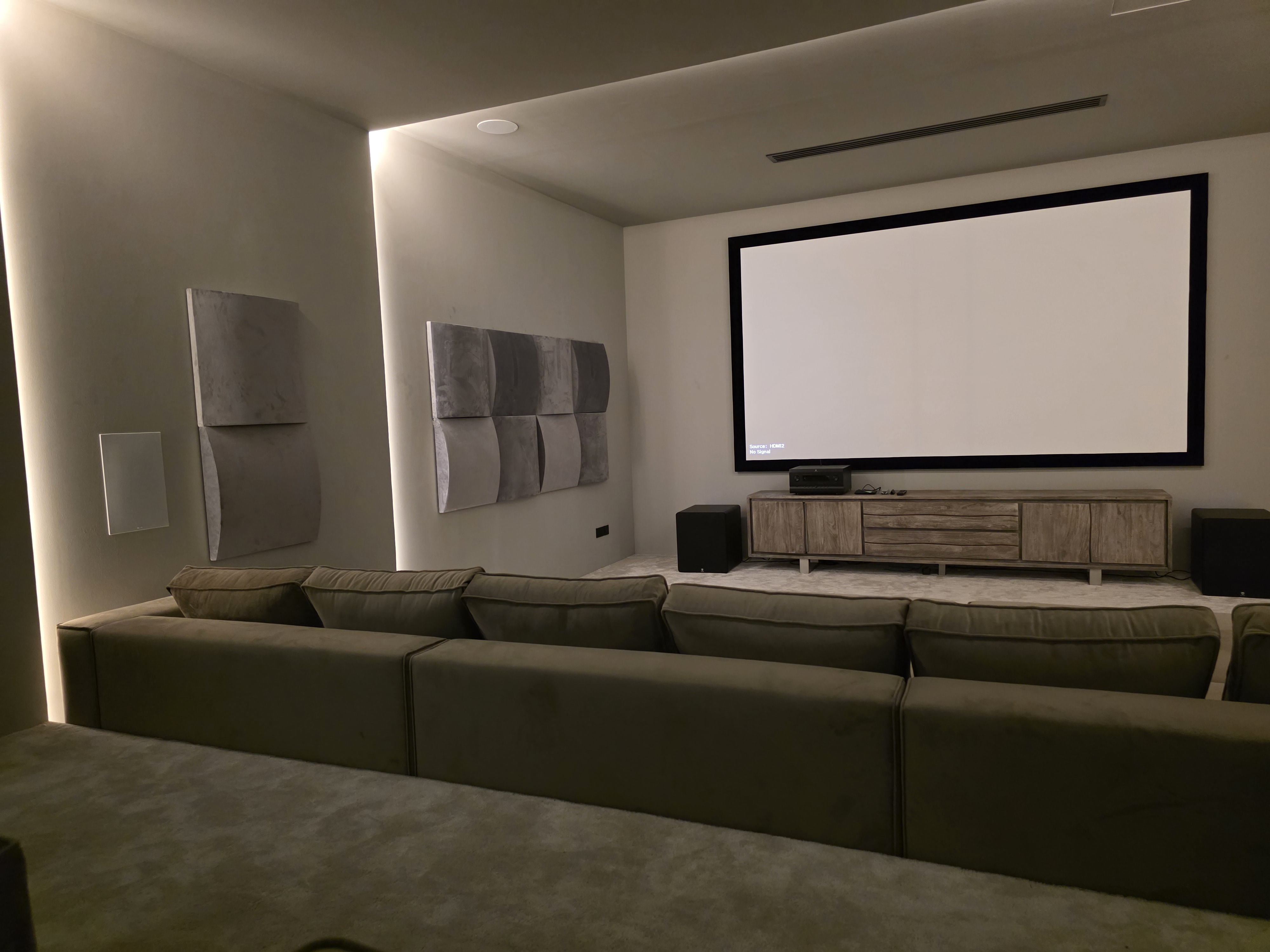
Positioning your subwoofers strategically in a cinema room can significantly enhance audio quality. Let’s explore how understanding room modes factors into this process.
Understanding Room Modes
Room modes are the patterns of sound waves that bounce around a room. When not managed, they can cause certain bass frequencies to be too loud or too soft. By positioning your subwoofer wisely, you can minimize these issues.
Start by testing different spots for your subwoofer. Often, placing it along a wall or in a corner can enhance bass, but every room is unique. Use a sound meter to check how different placements affect bass levels. A 10% improvement in bass evenness can make a noticeable difference.
Effective Multiple Subwoofer Arrays
Using multiple subwoofers can help distribute bass evenly across the room. This approach balances sound by canceling out peaks and nulls caused by room modes.
Arrange your subwoofers symmetrically. For instance, place them in opposite corners or at the midpoint of each wall. This setup can reduce unwanted sound reflections. Many experts report that using two subwoofers can offer up to 50% better bass distribution than one.
Managing Boundary Gain
Boundary gain occurs when sound waves reflect off walls, amplifying bass. While this can enhance bass power, it often leads to uneven sound.
To manage this, keep your subwoofers at least half a meter away from walls. This distance minimizes excessive bass build-up. Experiment with placement and measure the results. Correctly managing boundary gain can improve bass clarity by as much as 20%.
Mechanical Isolation Techniques

Mechanical vibrations can interfere with sound quality. Here’s how to isolate subwoofers to maintain clarity and prevent structural noise.
Implementing Riser Isolation
Risers elevate seating but can transfer vibrations if not isolated. Using rubber pads or isolators under risers can prevent this transfer.
Install these isolators at key points, especially where risers contact the floor. This approach can reduce vibration transmission by 60% or more. It’s a simple step that ensures seating areas remain vibration-free.
Floating Floor Systems Explained
Floating floors are another strategy to combat vibrations. These systems decouple the floor from the structure, reducing vibration transmission.
A floating floor consists of layers: a base, isolating material, and the top surface. This construction absorbs vibrations effectively. When done right, floating floors can cut vibration issues by up to 50%, ensuring a quiet environment.
Constrained Layer Damping Benefits
Constrained Layer Damping (CLD) involves using special materials to dampen vibrations. It works by converting vibration energy into heat, which dissipates.
Applying CLD to walls or floors can make a significant impact. It’s often used in professional settings for its effectiveness. By incorporating CLD, you can achieve 30% less vibration and noise.
Coordination with Structure and MEP

Integrating subwoofer placement and isolation with the building’s infrastructure is crucial. Let’s discuss why structural coordination matters.
Importance of Structural Coordination
Early coordination with structural elements prevents costly modifications later. When subwoofer placement is considered alongside building design, issues can be avoided.
Work with structural engineers to identify potential problem areas. This collaboration can save you from future rework, providing a 50% reduction in unexpected costs.
Navigating HVAC Noise Control
HVAC systems can introduce unwanted noise. Proper integration with audio setups is essential for maintaining sound clarity.
Position HVAC components away from critical listening zones. Use insulated ducts to minimize noise. With proper planning, HVAC noise can be reduced by 40%, enhancing the listening experience.
Equipment Rack Isolation Essentials
Equipment racks can vibrate and impact sound quality. Isolating these racks is crucial for preserving audio integrity.
Use vibration isolation mounts for racks. These mounts absorb movements, preventing them from affecting sound. Implementing this can lead to a 30% improvement in sound stability.
In summary, by understanding and implementing these strategies, you ensure your private cinema delivers high-quality sound without unwelcome vibrations. This approach not only enhances audio enjoyment but also protects your investment by preventing costly rework.


