

Mounting Speakers and Subwoofers Without Vibration Noise: Methods That Work in UAE Villas
Vibration noise often traces back to how speakers and subwoofers are mounted, not the equipment itself. In luxury UAE villas, overlooking mounting details leads to costly rework and compromised villa cinema acoustics. This post outlines speaker mounting techniques that prevent structure-borne noise and protect finishes before walls and ceilings close. Understanding these methods is essential to secure quiet, reliable systems that preserve investment and comfort for years.
Proven Speaker Mounting Techniques
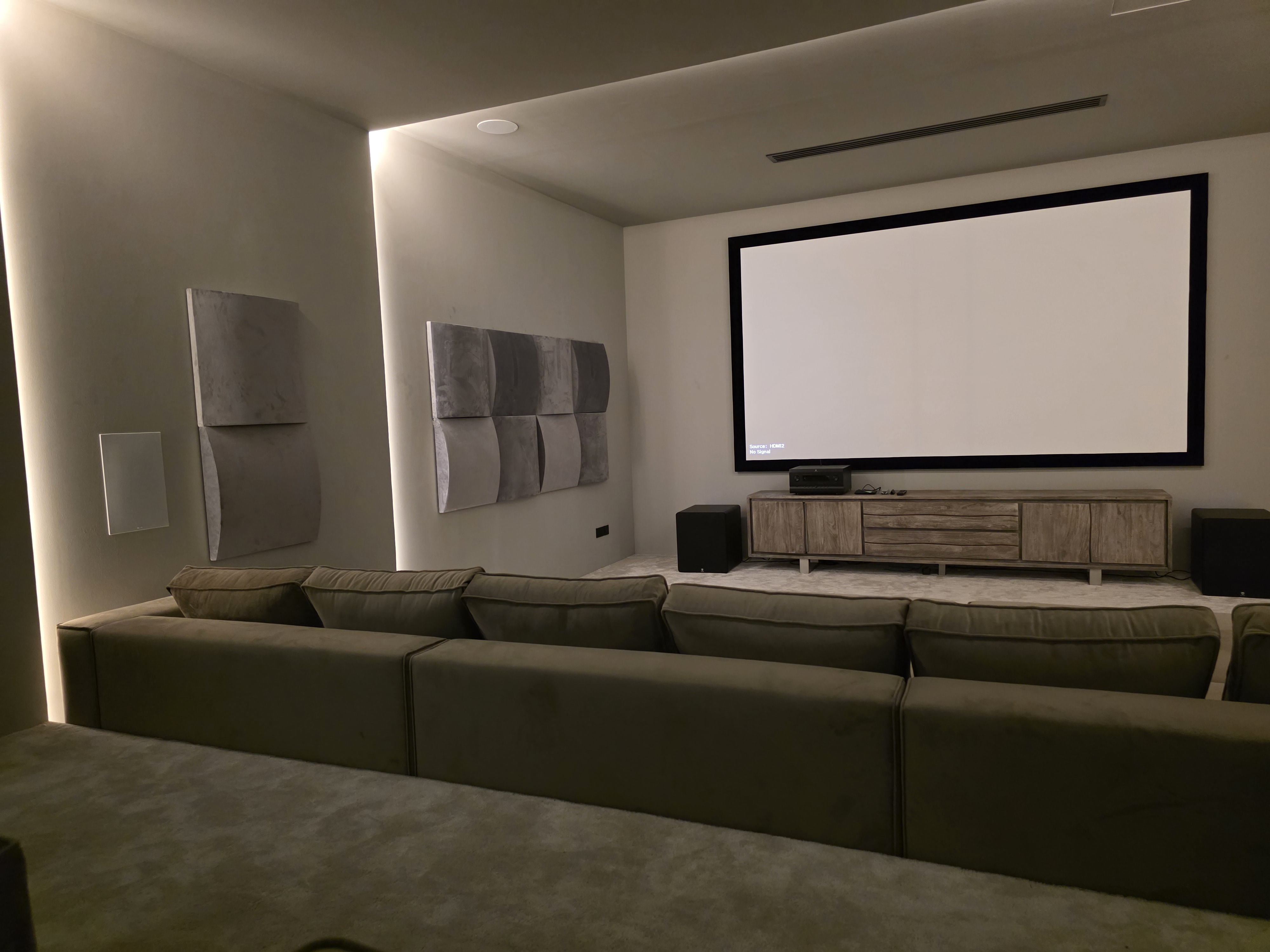
When it comes to preventing vibration noise, every detail counts. Proper speaker mounting is pivotal. Let’s explore techniques that ensure your villa remains a sanctuary of sound.
Reinforced Backer Boards
The foundation for any speaker is crucial. Reinforced backer boards offer a sturdy base that mitigates unwanted vibrations. By distributing the weight of the speakers evenly, these boards prevent structural strain. This stability enhances sound quality and prolongs the lifespan of your system. Picture this: a concert in your living room without a single buzz or rattle. Reinforced backer boards make this dream a reality.
Decoupled Brackets & Clips
Decoupled brackets are a game-changer. They separate the speaker from the mounting surface, reducing direct vibration transfer. Think of them as shock absorbers for your audio system. By isolating the speaker, these brackets allow for clear and precise sound delivery. Clips can further aid in minimizing contact points, ensuring vibrations are absorbed before reaching the structure. This approach not only enhances your listening experience but also protects walls from potential damage.
Mass and Damping Strategies
Adding mass and damping materials is another effective strategy. Mass-loaded vinyl and similar products absorb sound energy, preventing it from causing structural vibrations. In high-end settings, constrained-layer damping can also be employed. This method involves adding layers of materials with varying densities to dampen sound waves. Implementing these strategies ensures your villa remains a hub of tranquility, allowing you to enjoy rich sound without disturbance.
Subwoofer Mounting in UAE Villas
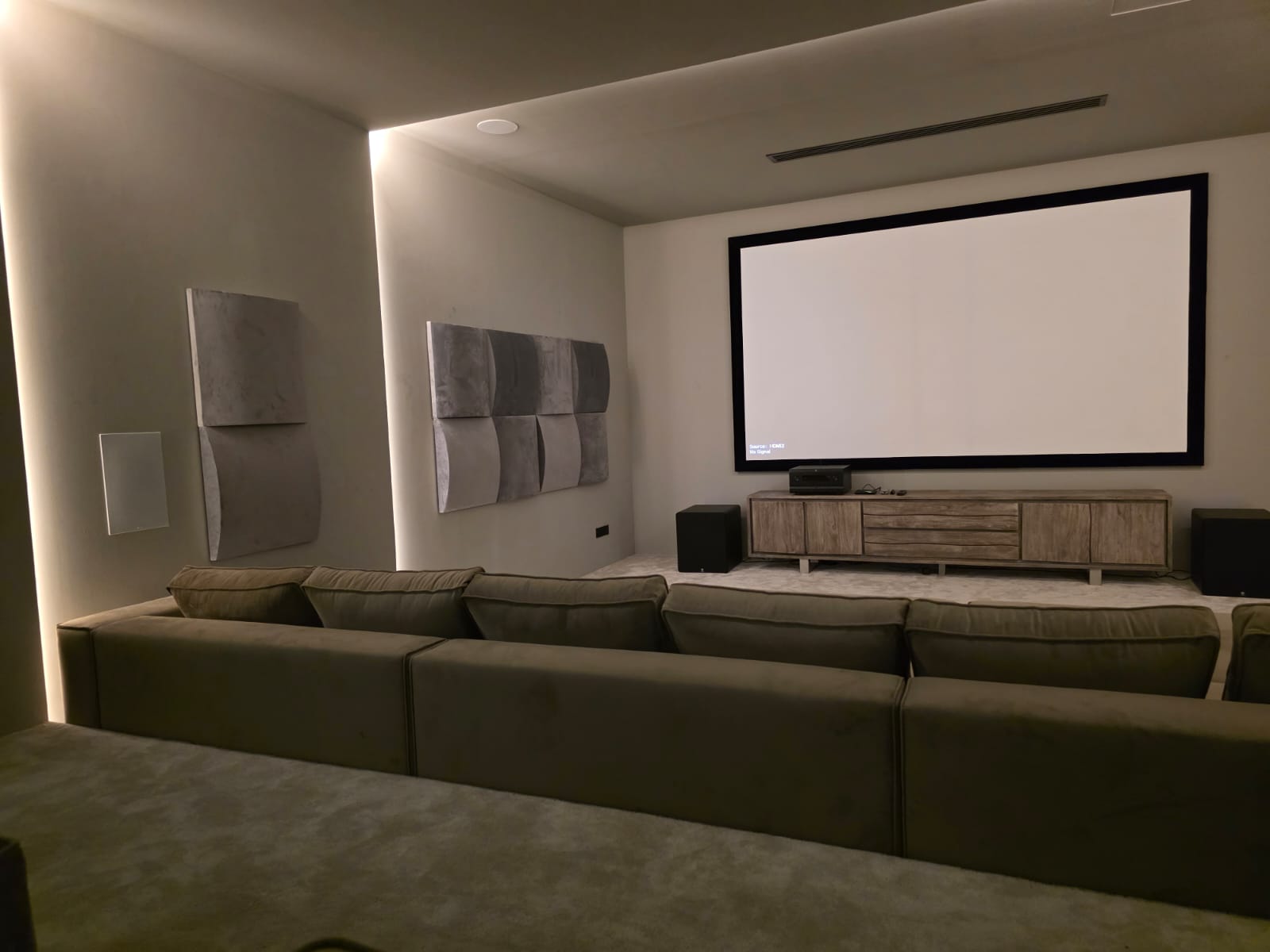
Subwoofers present unique challenges due to their powerful low-frequency output. Addressing these challenges early can save time and rework.
Floating Riser Design
A floating riser design prevents subwoofer vibrations from traveling through the floor. By using materials that isolate the riser from the slab, vibrations are absorbed before they reach your home’s structure. This technique not only improves sound quality but also prevents damage to finishes. Imagine enjoying deep bass without the accompanying floor rumble — a reality with this design approach.
Wall Reinforcement for Speakers
Strengthening walls where speakers are mounted is crucial. This reinforcement can involve additional framing or using specialized materials that absorb vibrations. By doing this, you ensure that sound stays pure and undistorted. Reinforced walls provide a stable base, preventing sound energy from causing structural vibrations. This ensures your villa remains an oasis of sound clarity and architectural integrity.
CMU Fixing for AV Systems
Concrete masonry units (CMUs) provide a robust solution for heavy AV systems. By securely fixing systems to these units, you reduce the risk of vibration transfer. This method offers a balance of strength and sound quality. It’s about creating a foundation that supports your audio ambitions. The result? A seamless blend of performance and durability, allowing you to enjoy your AV setup to its fullest potential without disruption.
Effective Vibration Noise Control
Achieving a noise-free environment requires more than just equipment choices. It’s about thoughtful integration and coordination.
Acoustic Decoupling Methods
Acoustic decoupling is about breaking the path of vibration transmission. Techniques like resilient mounts and clips are essential tools in this process. By isolating devices from the building structure, these methods ensure that sound waves don’t convert into unwanted vibrations. This approach not only protects the integrity of your finishes but also maintains the quality of sound. It’s a step that transforms potential issues into seamless audio experiences.
Structure-Borne Noise Reduction
Reducing structure-borne noise involves identifying and mitigating transmission paths. Techniques such as floating floors and isolated ceilings are essential. These methods create barriers that prevent sound from traveling through building materials. It’s about controlling the journey of sound from the source to the listener. By addressing these paths, you maintain an environment where sound is an asset, not a disruption.
MEP and AV Coordination Steps
Successful noise control relies heavily on coordination between mechanical, electrical, and plumbing systems (MEP) and AV setups. Early planning ensures that systems work harmoniously. This involves aligning designs, sharing insights, and anticipating potential conflicts. By coordinating these elements, you create a cohesive environment where technology enhances rather than disrupts. It’s about foresight and collaboration to ensure long-term success and satisfaction. Each step is a foundation for a sound experience that’s as seamless as it is impressive.
By following these proven techniques, you can ensure that your villa remains a sanctuary of sound, free from unwanted noise and vibrations.


